
Research Methodology, Ethics, and Reporting Standards for Multidisciplinary Studies
Research Methodology, Ethics, and Reporting Standards for Multidisciplinary Studies
Introduction: The Complexity of Multidisciplinary Research
Multidisciplinary research is at the forefront of modern academic inquiry. As global challenges become increasingly complex, researchers are required to integrate knowledge from diverse fields such as engineering, health sciences, social sciences, economics, and environmental studies.
While this approach enhances innovation and real-world applicability, it also introduces significant challenges in research methodology, ethical considerations, and reporting standards.
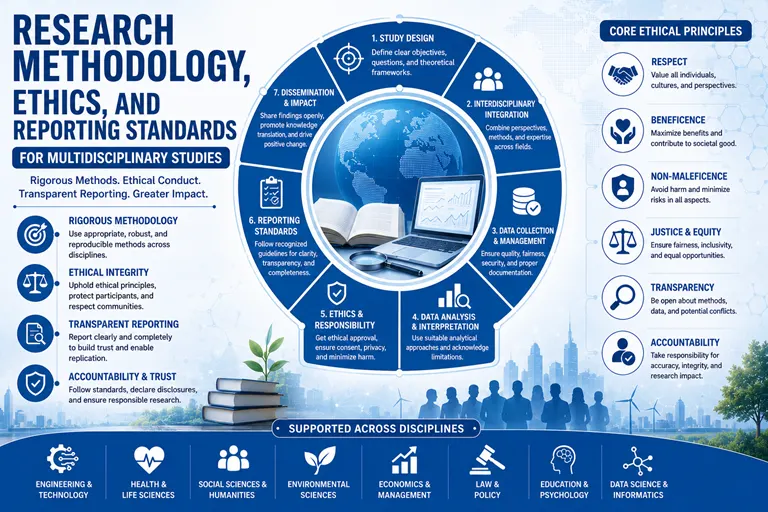
For journals like The Spectrum Journal, which actively promote multidisciplinary scholarship, maintaining high standards in methodology and ethics is essential for ensuring research quality, credibility, and impact.
This article provides a comprehensive guide to designing, conducting, and reporting multidisciplinary research in line with modern academic expectations.
Understanding Multidisciplinary Research Methodology
What Makes Multidisciplinary Research Unique
Unlike single-discipline studies, multidisciplinary research:
- Combines methods from different fields
- Integrates diverse theoretical frameworks
- Addresses complex, real-world problems
- Requires collaboration across expertise areas
This diversity demands a flexible yet structured methodological approach.
Types of Multidisciplinary Research Designs
Common approaches include:
- Parallel design: Different disciplines work independently on the same problem
- Sequential design: One discipline informs the next phase of research
- Integrated design: Multiple disciplines collaborate simultaneously
Each design requires careful planning to ensure coherence and validity.
Designing a Robust Research Methodology
Defining Clear Research Objectives
A successful multidisciplinary study begins with:
- Clearly defined research questions
- Alignment across disciplines
- Relevance to real-world challenges
Selecting Appropriate Methods
Researchers may combine:
- Quantitative methods (statistical analysis, modelling)
- Qualitative methods (interviews, case studies)
- Experimental approaches
- Computational simulations
The key is to ensure methodological compatibility.
Data Integration and Analysis
One of the biggest challenges is integrating data from different sources.
Best practices include:
- Standardising data formats
- Using interoperable tools
- Applying mixed-method analysis frameworks
Ethical Considerations in Multidisciplinary Research
Why Ethics Are More Complex in Multidisciplinary Studies
Ethical challenges increase when research spans multiple disciplines because:
- Different fields have different ethical standards
- Data privacy requirements may vary
- Human and environmental impacts may overlap
Key Ethical Principles
Researchers must ensure:
- Informed consent
- Data confidentiality
- Transparency in methodology
- Avoidance of bias and misconduct
Institutional and Ethical Approvals
Depending on the study, approvals may be required from:
- Institutional Review Boards (IRB)
- Ethics committees
- Regulatory authorities
Adhering to recognised frameworks such as COPE (Committee on Publication Ethics) strengthens credibility.
Addressing Ethical Challenges in Practice
Managing Collaborative Ethics
When multiple disciplines are involved:
- Establish shared ethical guidelines
- Define responsibilities clearly
- Ensure consistent compliance
Data Sharing and Ownership
Multidisciplinary research often involves shared datasets.
Researchers should:
- Define data ownership agreements
- Ensure proper attribution
- Follow open data policies where applicable
Reporting Standards for Multidisciplinary Studies
Importance of Transparent Reporting
Clear reporting ensures:
- Reproducibility
- Peer-review quality
- Reader understanding
Use of Standard Reporting Guidelines
Depending on the study type, researchers should follow:
- CONSORT (clinical trials)
- PRISMA (systematic reviews)
- STROBE (observational studies)
- CARE (case reports)
For multidisciplinary studies, combining relevant guidelines may be necessary.
Structuring a Multidisciplinary Research Paper
A well-structured paper includes:
- Introduction with interdisciplinary context
- Methods detailing all approaches used
- Results integrating findings
- Discussion connecting disciplines
- Conclusion with broader implications
Challenges in Reporting Multidisciplinary Research
Terminology Differences
Different disciplines may use different terminology for similar concepts.
Methodological Transparency
Explaining multiple methods clearly can be complex.
Reviewer Expectations
Reviewers from different fields may evaluate the same study differently.
Journals must ensure balanced peer review across disciplines.
Role of Journals in Maintaining Standards
Editorial Responsibility
Journals like The Spectrum Journal play a critical role in:
- Enforcing methodological rigor
- Ensuring ethical compliance
- Maintaining reporting consistency
Peer-Review System
A structured peer-review system helps:
- Match manuscripts with appropriate reviewers
- Ensure fair evaluation across disciplines
- Maintain publication quality
Supporting Multidisciplinary Research with Modern Systems
Importance of Structured Workflow
Managing multidisciplinary submissions requires:
- Clear submission guidelines
- Efficient reviewer assignment
- Transparent editorial decisions
Role of ScholarJMS
A modern system like ScholarJMS supports:
- Structured manuscript submission
- Reviewer management across disciplines
- Workflow automation
- Metadata consistency
This ensures that multidisciplinary research is handled efficiently and professionally.
Best Practices for Researchers
Plan Collaboration Early
Engage experts from different disciplines at the beginning of the project.
Maintain Clear Communication
Ensure all team members understand:
- Research objectives
- Methodological approach
- Ethical responsibilities
Document Everything
Maintain detailed records of:
- Methods used
- Data sources
- Analytical processes
Follow Reporting Standards
Adhere to relevant guidelines and ensure clarity in writing.
Frequently Asked Questions (FAQs)
What is multidisciplinary research methodology?
It is an approach that integrates methods from multiple disciplines to address complex problems.
Why are ethics important in multidisciplinary research?
Because diverse fields have different ethical standards, requiring careful coordination.
How can researchers ensure proper reporting?
By following recognised reporting guidelines and maintaining transparency.
What challenges do multidisciplinary studies face?
They face issues related to methodology integration, terminology, and reviewer expectations.
How do journals support multidisciplinary research?
By providing structured peer-review systems and enforcing standards.
Conclusion: Strengthening Research Through Standards and Integrity
Multidisciplinary research represents the future of academic inquiry. However, its success depends on strong foundations in:
- Research methodology
- Ethical integrity
- Transparent reporting
For journals like The Spectrum Journal, maintaining these standards ensures:
- High-quality publications
- Credibility among researchers
- Contribution to global knowledge
Researchers, institutions, and journals must work together to uphold these principles and advance meaningful, impactful research across disciplines.